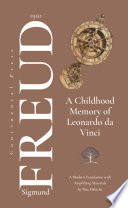
A Childhood Memory of Leonardo da Vinci
Publisher, ISBN & more
- Publisher
- Continental Press
- ISBN
- 9783989889118
About this book
A modern rendering of Sigmund Freud’s 1910 work A Childhood Memory of Leonardo da Vinci (Eine Kindheitserinnerung des Leonardo da Vinci), a fascinating exploration of the intersection between psychoanalysis, art, and biography. In this unique study, Freud applies his psychoanalytic theories to the life and work of the Renaissance polymath Leonardo da Vinci, using a single childhood memory recounted by Leonardo as the key to understanding his personality, creativity, and psychological development. Freud’s analysis focuses on Leonardo’s memory of being visited by a kite (or vulture) as an infant, which he interprets as a symbolic representation of the artist’s unconscious desires and conflicts. Freud argues that Leonardo’s fascination with flight, his artistic mastery, and his scientific curiosity can all be traced back to this early experience and its impact on his psychosexual development. By examining Leonardo’s relationships, his unfinished works, and his scientific notebooks, Freud constructs a psychoanalytic portrait of the artist as a man driven by sublimated sexual energy and a deep connection to his mother. This work is notable for its innovative application of psychoanalytic theory to the study of art and biography, as well as its exploration of the role of sublimation in creative achievement. Freud suggests that Leonardo’s genius was fueled by his ability to channel repressed desires into artistic and scientific pursuits, offering a compelling model for understanding the psychological roots of creativity. This fresh, modern translation from the original German manuscript breathes new life into this historically significant work. Freud’s extensive writings have often been inaccessible to the general reader, and this edition seeks to bridge that gap by providing direct access to his original ideas. The Reader’s Edition introduces Freud’s work in context, with an illuminating Afterword that explains his philosophical project, situates it within the Modernist milieu, and explores its enduring impact on contemporary thought. The Afterword also examines the relationship and intellectual conflict between Freud and Carl Jung, particularly their differing views on the interpretation of art and creativity. While Freud emphasized the role of repressed desires and childhood experiences, Jung focused on the collective unconscious and archetypal symbols. Accompanied by a timeline of Freud’s life and works, an index of philosophical terminology, and a short biography, this edition is an indispensable resource for students, scholars, and anyone interested in the intersection of psychoanalysis, art, and biography. The inclusion of supplemental materials, such as illustrations and a glossary of Freudian psychological terms, enhances the reader’s understanding of this complex and historically important work. Whether you are a seasoned scholar or a curious newcomer, this volume offers a comprehensive and accessible introduction to Freud’s groundbreaking theories on creativity and their enduring relevance to the study of human psychology.
Similar books
Rummaging the shelves…
Reviews
Loading reviews…